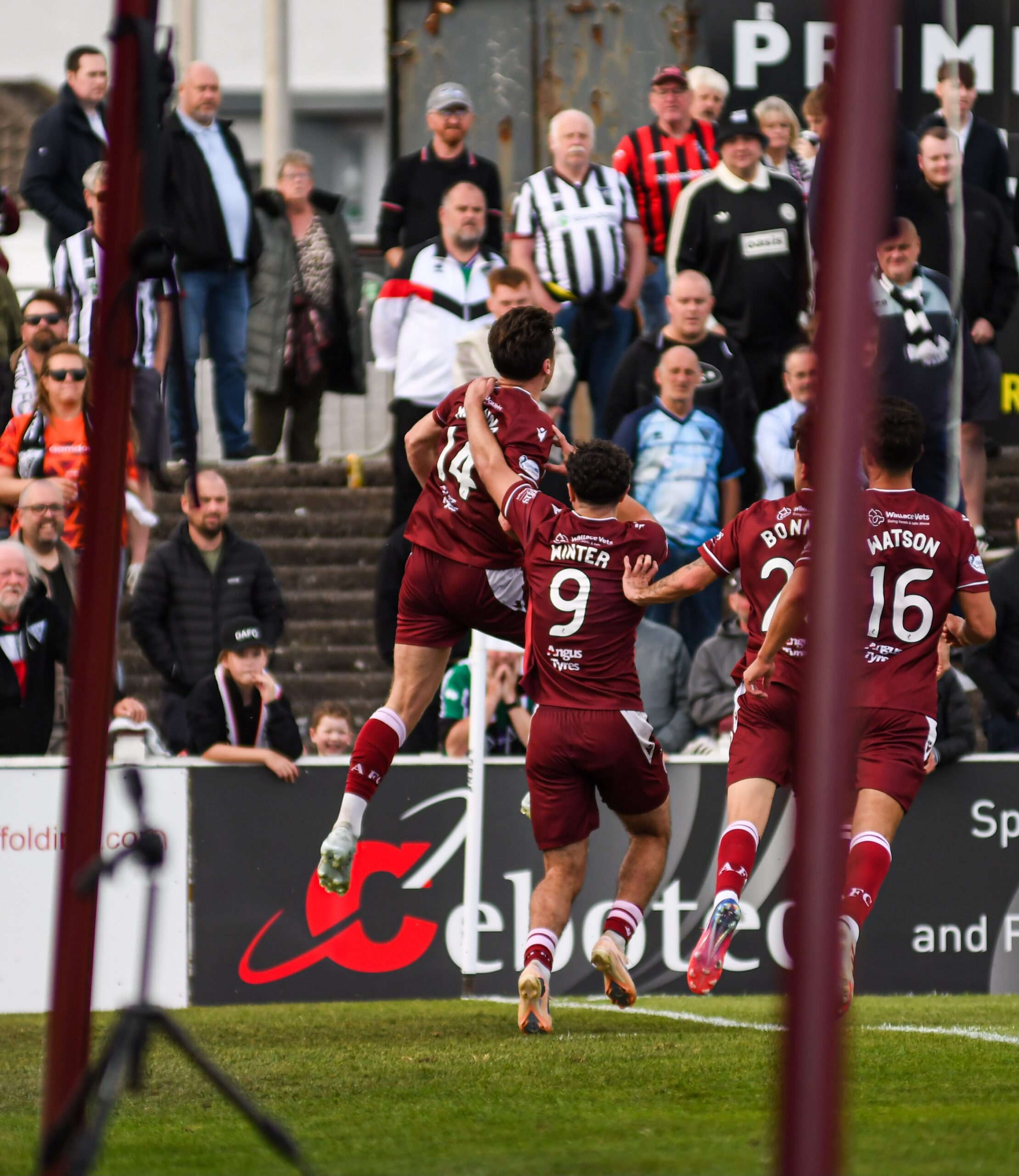
For supporters, football is largely measured in blocks of 90 minutes.
You arrive at Gayfield, find your spot, watch Arbroath go to work and, by the end of the afternoon, there is a result to celebrate, accept or spend the journey home picking apart.
But those 90 minutes are only the visible part of a much bigger job.
A Championship season is a test of far more than what happens between the first and final whistle. There are months of training, recovery, travelling and preparation to negotiate, often in conditions that aren’t particularly forgiving.
Producing your best on a Saturday is one challenge. Finding a way to do it again and again across an entire season is another altogether.
Football tends to be remembered through its big moments.
A late winner, a brilliant save or a last-ditch tackle can become the talking point of the weekend. Nobody leaves Gayfield excitedly discussing how well somebody recovered on Tuesday morning.
Yet the less glamorous work matters.
Players have to recover from the previous fixture while preparing themselves for the next one. Training has to maintain fitness without unnecessarily exhausting a squad that could have another match only a few days away.
Then there is the tactical side.
Opponents have different strengths, weaknesses and styles. Preparing to face one side can present a completely different challenge from preparing to face another.
By the time Saturday afternoon arrives, much of the work that can influence the game has already taken place.
The Championship can be particularly unforgiving.
Teams know each other well, margins can be small and there are few opportunities to switch off. A good run can quickly change the complexion of a season, while a difficult few weeks can do exactly the same in the opposite direction.
Then the Scottish weather joins in.
As autumn becomes winter, pitches, wind and rain can add another dimension to matches. Players still have to train, travel and recover before doing it all over again the following weekend.
It means managing a season rather than simply managing individual matches.
There is no single trick that guarantees success. Instead, clubs look for small improvements wherever they can find them. Better preparation, sensible recovery and effective management of players’ workloads can provide enhanced odds of keeping a squad fresh and available when the fixture list becomes demanding.
Those little advantages may not make headlines, but across a long campaign they can matter.
One of the strange things about football is that preparation for the next match effectively begins as soon as the previous one ends.
A demanding Saturday afternoon doesn’t simply disappear when the players leave the pitch.
There is fatigue to manage, knocks to assess and another week of football to prepare for. Throw a midweek fixture into the schedule and the turnaround becomes even shorter.
That is why recovery is not really time away from preparation. It is part of it.
The challenge is finding the balance between doing enough work to be ready for the next opponent and allowing players enough time to recover from the last one.
Get that balance right and Saturday becomes considerably easier.
This is also where having options becomes important.
Supporters naturally talk about the starting XI, but very few clubs can expect to field exactly the same team every week from the beginning of a season until the end.
Injuries happen. Suspensions happen. Form changes. Some players will inevitably need a rest.
That gives opportunities to others, but it also highlights why football is a squad game.
Players coming into the side need to understand their roles and be ready to perform, even if they haven’t started the previous few matches. Competition for places can also help maintain standards when everyone knows a shirt cannot simply be taken for granted.
Over a full Championship campaign, contributions from beyond the regular starting XI can become extremely valuable.
Not every Saturday will be pretty, either.
There will be afternoons when everything clicks and a team can play exactly the football it wants. There will be others when the wind is howling, chances are scarce and getting a result requires patience rather than flair.
The ability to deal with both is important.
Sometimes a match calls for attacking quality. Sometimes it requires organisation and discipline. And occasionally it comes down to digging in, defending a lead and finding a way through an uncomfortable final ten minutes.
A team hoping to sustain a strong season needs more than one way of getting a result.
That mental side of the game can be every bit as important as physical preparation. A long campaign inevitably brings setbacks, and the response to them often tells you more than an easy victory does.
There aren’t many grounds quite like Gayfield.
Its location gives Arbroath a home with a character that is difficult to manufacture, particularly when the North Sea decides to make its presence felt.
Those conditions are part of the club and part of following football here.
But familiarity alone doesn’t win matches. Whatever the weather is doing, the basics still matter: organisation, concentration, fitness and the ability to make good decisions when players are tiring.
That brings everything back to the work done away from the public gaze.
The Saturday performance is where preparation is tested, not where it begins.
When a team is playing well, it is easy to focus entirely on the results. Three points go onto the table and attention quickly turns towards the next opponent.
Behind every result, however, is another week of work.
Some of it is tactical. Some is physical. Some is simply about ensuring players are ready to go again after a demanding match.
There will inevitably be difficult spells during any Championship campaign. Players will pick up knocks, performances will fluctuate and conditions will become tougher as the season progresses.
That’s precisely why the work between matches matters.
Supporters see the tackles, goals and saves. They see the part that counts on the scoreboard.
But making those 90 minutes count requires considerably more than 90 minutes of work.
And over a long, competitive Championship season, doing the unseen things well can make all the difference.